

Value guide
LEGO Price Per Piece
The hobby’s favourite value number, explained properly: what the ratio measures, what a good one looks like, and which sets we have bench-tested actually deliver it.
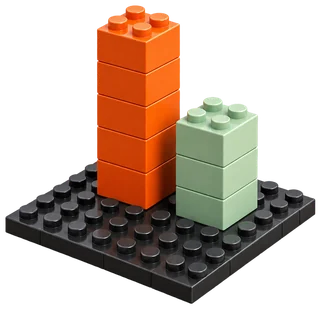
Price per piece is the quickest sanity check in the hobby: take the price in front of you and divide it by the piece count on the box. A 1,200 piece set priced at 120 works out to 0.10 per piece; the same money on a 600 piece box doubles the ratio to 0.20. It takes ten seconds, it works in any currency, and it separates a generous box from an expensive one before you have read a single review.
It is also the most misread number in the hobby. So this page does three jobs: it gives you our reference bands for what a good ratio looks like, it ranks the sets we have actually tested by how well their box delivers, and it is blunt about where the ratio lies. One thing you will not find here is a printed price. Prices move week to week between retailers and regions, so we publish the piece counts and the yardstick, and the value calculator does the arithmetic with the price you can actually get.
What counts as a good price per piece?
These are the bands the calculator has always used, in your own currency per piece. They hold roughly whether the price is in dollars, euros or pounds, and they are reference points rather than promises.
| Ratio per piece | How it reads |
|---|---|
| under 0.08 | Exceptional. Well under the usual ratio; check what the pieces actually are, then move quickly. |
| 0.08 to 0.11 | Strong value for most themes. The comfortable buying zone. |
| 0.11 to 0.14 | About standard. Neither a bargain nor a problem. |
| 0.14 to 0.18 | On the pricey side. Normal for licensed and specialised sets, worth questioning elsewhere. |
| over 0.18 | Premium. You are paying for the subject or the licence, not the plastic. |
Have a price in front of you? Type the set number and the price, and read the ratio against these bands.
Open the value calculatorThe best value LEGO sets we have tested
Ranked by our Value axis, the parts-to-box read each reviewer gives a set against its own theme at bench time, with the overall Stud Score as the tiebreak. We publish no retail prices, so this is a ranking of how well each box delivers, not of what it costs this week; pair any row with the price you are seeing.
| # | Set | Pieces | Theme | Value | Stud Score |
|---|---|---|---|---|---|
| 1 | 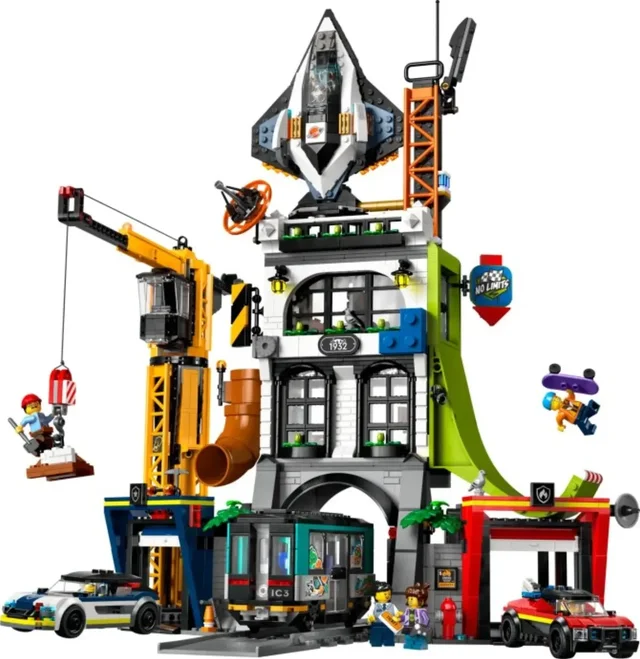 The City Tower 60473 The City Tower 60473 | 1,943 | City | 8.5/10 | 85 |
| 2 | 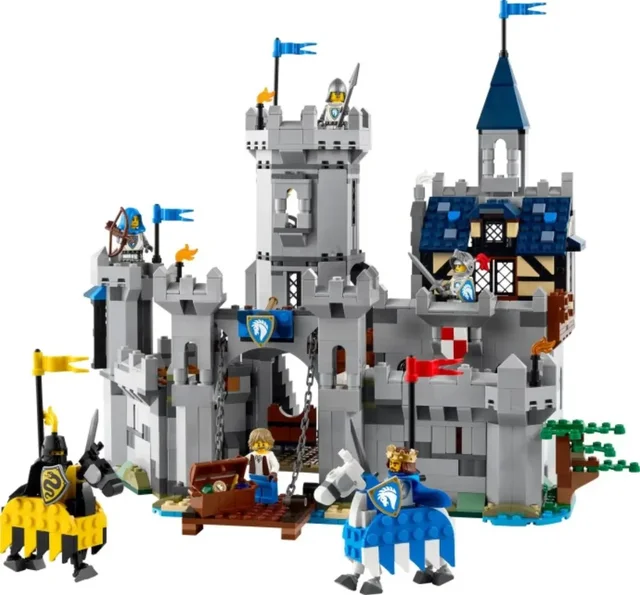 Medieval Horse Knight Castle 31168 Medieval Horse Knight Castle 31168 | 1,371 | Creator | 8.5/10 | 82 |
| 3 | 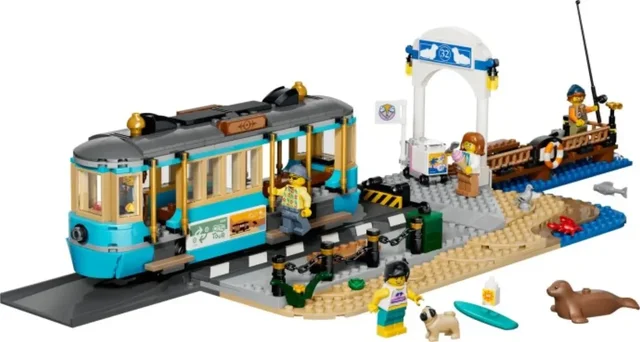 Classic Beach Tram 60506 Classic Beach Tram 60506 | 693 | City | 8.5/10 | 75 |
| 4 | 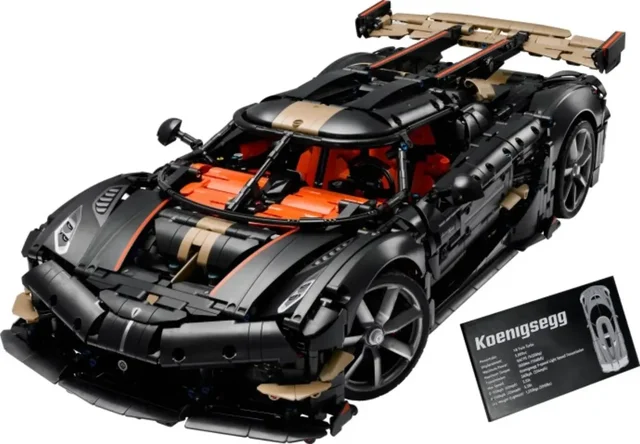 Koenigsegg Sadair's Spear Megacar 42232 Koenigsegg Sadair's Spear Megacar 42232 | 4,104 | Technic | 8/10 | 86 |
| 5 |  The Old Town 15th Anniversary 71861 The Old Town 15th Anniversary 71861 | 4,851 | Ninjago | 8/10 | 85 |
| 6 | 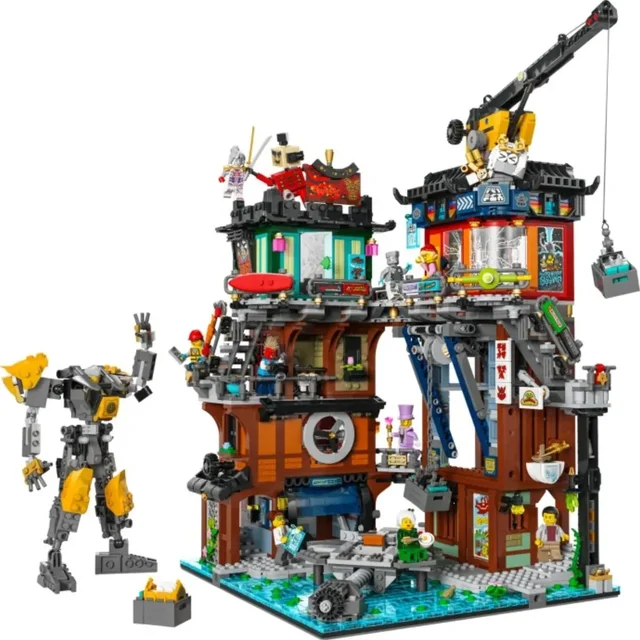 NINJAGO City Workshops 71837 NINJAGO City Workshops 71837 | 3,247 | Ninjago | 8/10 | 85 |
| 7 | 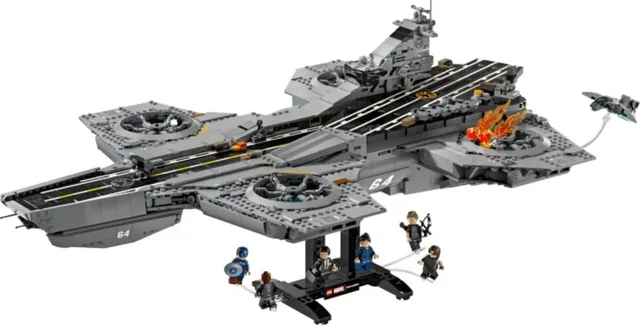 S.H.I.E.L.D. Helicarrier 76354 S.H.I.E.L.D. Helicarrier 76354 | 3,057 | Super Heroes Marvel | 8/10 | 85 |
| 8 | 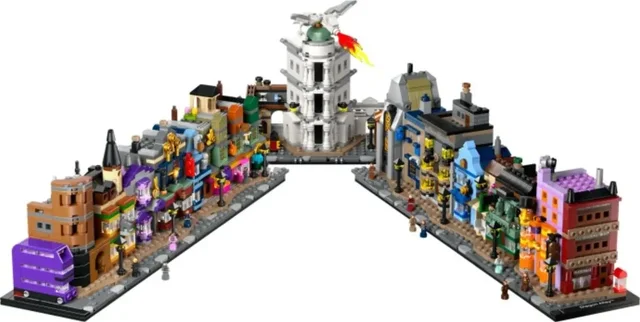 Diagon Alley Wizarding Shops 76444 Diagon Alley Wizarding Shops 76444 | 2,750 | Harry Potter | 8/10 | 85 |
| 9 | 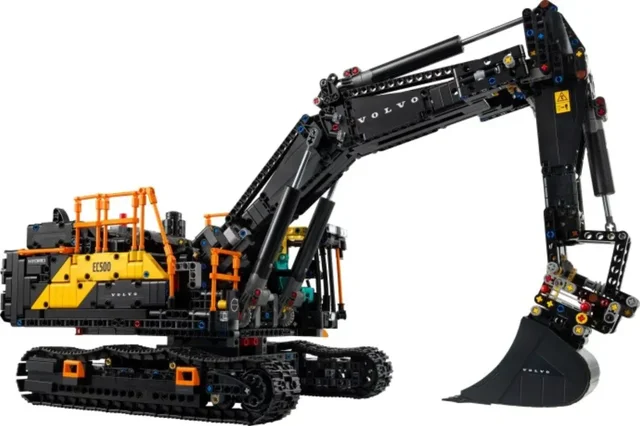 Volvo EC500 Hybrid Excavator 42215 Volvo EC500 Hybrid Excavator 42215 | 2,359 | Technic | 8/10 | 85 |
| 10 | 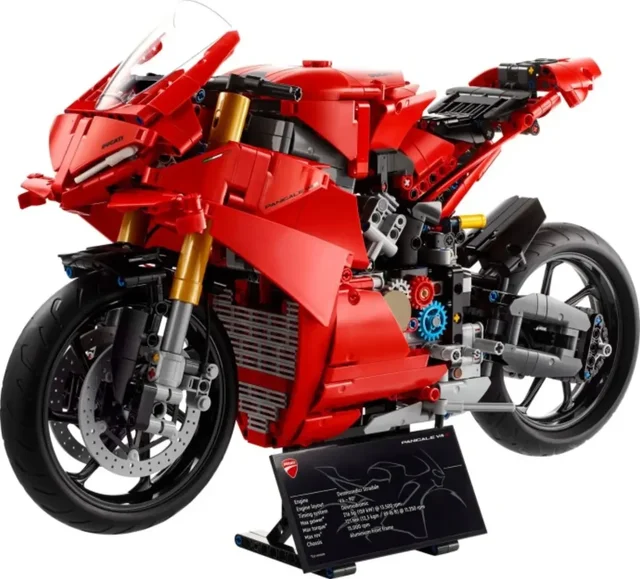 Ducati Panigale V4 S Motorcycle 42202 Ducati Panigale V4 S Motorcycle 42202 | 1,603 | Technic | 8/10 | 84 |
| 11 | 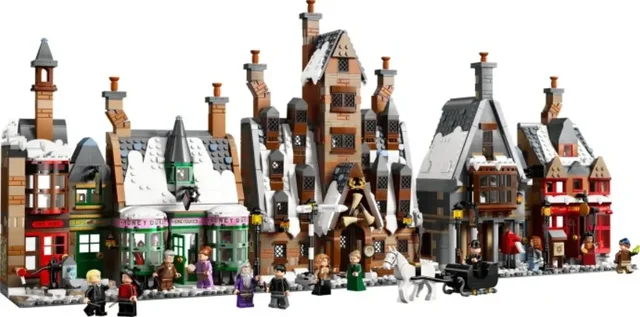 Hogsmeade Village: Collectors' Edition 76457 Hogsmeade Village: Collectors' Edition 76457 | 3,228 | Harry Potter | 8/10 | 83 |
| 12 | 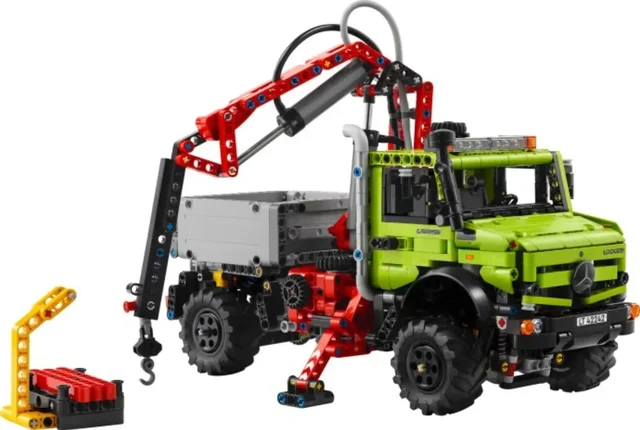 Mercedes-Benz Unimog U 5023 with Crane 42242 Mercedes-Benz Unimog U 5023 with Crane 42242 | 1,189 | Technic | 8/10 | 83 |
| 13 |  The Temple Bounty 71848 The Temple Bounty 71848 | 2,388 | Ninjago | 8/10 | 81 |
| 14 |  Ultra Dragon Battle 71872 Ultra Dragon Battle 71872 | 2,178 | Ninjago | 8/10 | 81 |
| 15 |  Wild Animals: Family of Koalas 31388 Wild Animals: Family of Koalas 31388 | 1,536 | Creator | 8/10 | 81 |
| 16 |  Iconic Pirate Ship 31387 Iconic Pirate Ship 31387 | 1,074 | Creator | 8/10 | 81 |
| 17 | 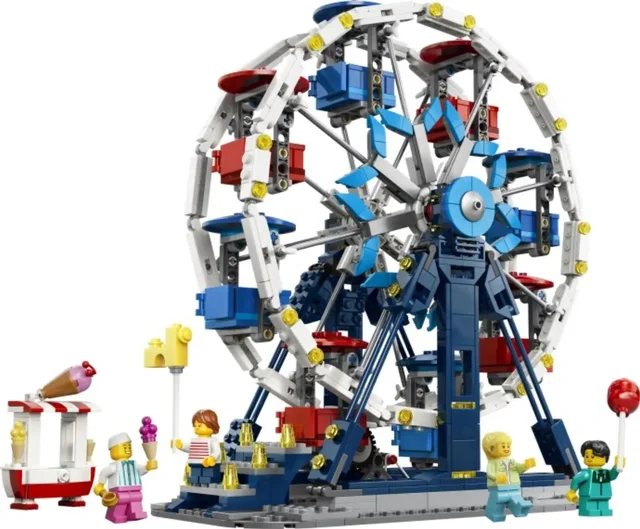 Iconic Ferris Wheel 31389 Iconic Ferris Wheel 31389 | 916 | Creator | 8/10 | 81 |
| 18 | 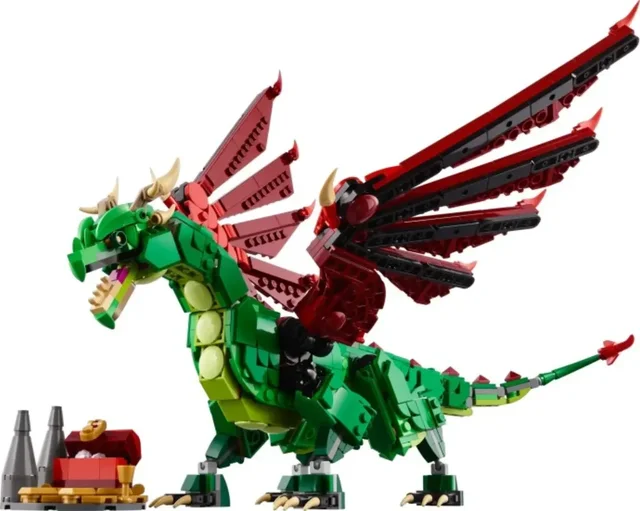 Medieval Dragon 31161 Medieval Dragon 31161 | 715 | Creator | 8/10 | 81 |
| 19 | 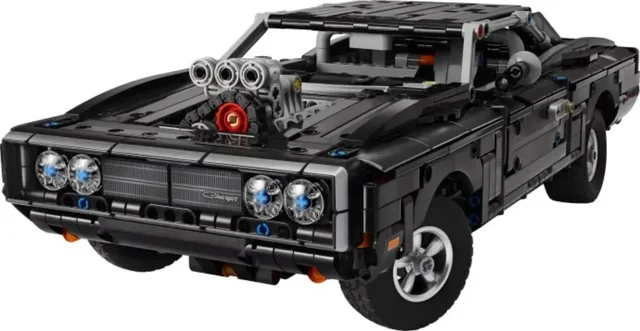 Fast and Furious Dodge Charger R/T Car 42231 Fast and Furious Dodge Charger R/T Car 42231 | 1,516 | Technic | 8/10 | 80 |
| 20 | 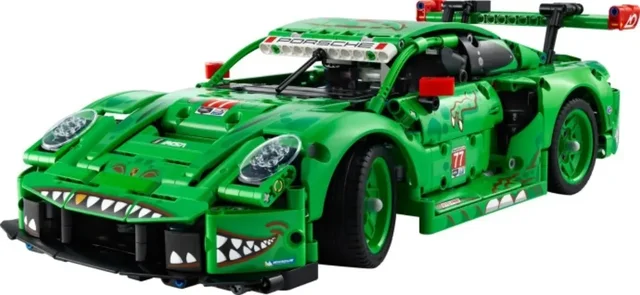 Porsche 911 GT3 R REXY AO Racing Car 42224 Porsche 911 GT3 R REXY AO Racing Car 42224 | 1,313 | Technic | 8/10 | 80 |
Piece counts are catalogue facts; the Value axis and Stud Score are our own editorial marks, scored per the published rubric on how we score. Every set links to its full bench review.
Judge the ratio within a theme, not across the hobby
The single biggest mistake with price per piece is comparing a Technic flagship to a Botanicals bouquet. Different themes are built from different parts: a licensed set carries licence fees and minifigures, a Technic box is dense with functional elements, and a display set spends its count on big shaping pieces. Each theme has its own normal, which is why our reviewers mark the Value axis against the set’s own theme rather than the whole catalogue.
Practically, that means the bands above are a starting point you tighten by theme. For an unlicensed City or Creator box, expect to sit in the strong-value band without trying. For Star Wars, Harry Potter or Marvel, the standard band is already a fair deal, and true bargains show up mostly in sale windows.
How big the boxes run, theme by theme
Straight from the current catalogue: how many sets each major theme has on shelves and how large a typical box is. Bigger medians generally mean more room for the ratio to work in your favour.
| Theme | Current sets | Median pieces | Largest |
|---|---|---|---|
| Star Wars | 61 | 581 | 9,031 |
| Friends | 54 | 377 | 2,040 |
| City | 52 | 478 | 1,943 |
| Disney | 47 | 474 | 3,899 |
| Seasonal | 43 | 237 | 3,171 |
| Technic | 43 | 793 | 4,104 |
| Ninjago | 41 | 561 | 4,851 |
| Super Heroes Marvel | 41 | 379 | 3,057 |
| Creator | 40 | 342 | 1,536 |
| Icons | 35 | 1,202 | 8,278 |
Counts cover the 2025 and 2026 catalogue of buildable sets of 100 pieces or more, from the public Rebrickable catalogue.
Where price per piece misleads you
The ratio counts pieces, not what they are. A box can hit a spectacular number by padding itself with one-stud rounds and cheese slopes, and a set of big, clever, reusable parts can read expensive and still be the better buy. It also says nothing about the build experience, which is half of what you are paying for. Use the ratio to shortlist and the review to decide; we wrote a full guide to using the ratio without being fooled by it.
Common questions
- What is a good price per piece for LEGO?
- As a rule of thumb, around 0.10 in your own currency per piece is the hobby's long-standing benchmark. We treat anything under 0.11 as strong value for most themes, 0.11 to 0.14 as standard, and ratios above 0.14 as the licensed-and-specialised zone where the subject has to justify the premium.
- How do I calculate price per piece?
- Divide the price you are looking at by the set's piece count. A 1,200 piece set priced at 120 works out to 0.10 per piece. Our value calculator does the arithmetic for you and prefills the piece count when you type a set number.
- Why do licensed LEGO sets cost more per piece?
- Licence fees, minifigure-heavy boxes and specialised moulds all push the ratio up. That is why we judge the ratio within a theme rather than across the whole catalogue: a Star Wars set at 0.14 can be a fair deal while a City set at the same ratio is expensive.
- Is a lower price per piece always better?
- No. The ratio counts pieces, not what they are. A box padded with tiny one-stud elements can post a spectacular ratio and still build into less model than a set full of large, useful parts. Treat the ratio as a first filter and the review as the verdict.
- Why does Studcrate not list set prices?
- Because prices move constantly between retailers, regions and sale windows, and a printed price is wrong within weeks. We publish the piece counts, our scores and the calculator; you bring the price actually in front of you, which is the only one that matters.
More from the value desk